United Kingdom · guide · 7 September 2026
How to read a Compliance Assessment Report (CAR)
A Compliance Assessment Report (CAR) is the Environment Agency’s record of a compliance assessment — a site inspection, audit, desktop review, or check of monitoring data. This note is a plain-English map of what the form usually contains. Source: EA guidance on assessing and scoring environmental permit compliance (OGL v3.0).
Free CAR check · £19.99 Full CARBrief · £49.99 Permit + CAR Review — sourced reading only; not EA advocacy or permit drafting.
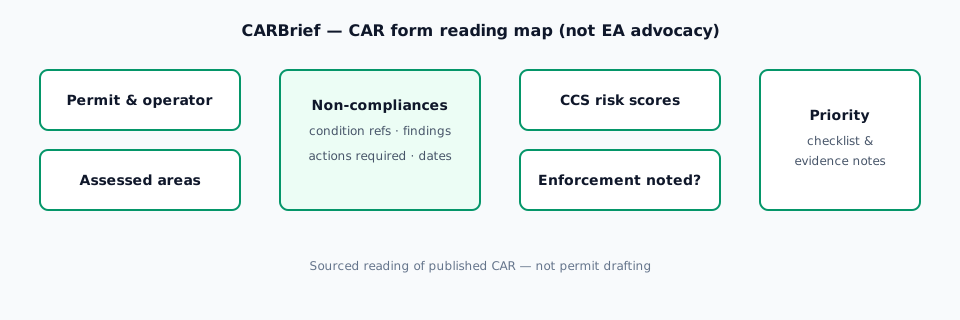
What the form is for
The EA records findings on a CAR form, gives the permit holder a copy, and must put it on the public register. Newer CARs for waste, installations, and water-discharge activities are also published on Public Register Online.
What to look for first
- Permit number and operator — confirm it is the right site.
- Date of assessment and whether it was an inspection, audit, or desktop assessment.
- What was assessed — the form marks sub-criteria as assessed (A), not assessed (N), not applicable (NA), or ongoing (O).
- Non-compliances — what is wrong, actions required, dates, and any enforcement noted.
- Risk category and score — if a permit condition was breached (see what CCS scores mean).
How conditions are grouped on the form
A permit may have many conditions. On the CAR they are summarised into high-level areas (permitted activities, infrastructure, general management, incident management, emissions, amenity, monitoring/records, resource efficiency) with sub-criteria under each. Non-compliances are recorded under the sub-criteria that best describe them.
After the assessment
The EA usually aims to send the CAR within 14 days of the assessment (or of receiving monitoring data). The form should explain what is wrong, what actions are needed, by when, and whether enforcement is being considered. See our deadlines guide for more on response timescales and appeal routes. If a permit holder disagrees, EA guidance describes raising concerns with the issuing officer within 14 calendar days of receipt, then a regulatory appeal route within 28 calendar days of that response — this guide does not advise whether or how to appeal.
What CARBrief does with a CAR
We extract and organise status, scored non-compliances, linked permit conditions, deadlines, a priority checklist, evidence-to-retain notes, and page references from the published CAR. We cite the EA wording so you can see what was stated. We do not invent findings, soften the language, or tell you how to respond. That is sourced reading — not advice. For deadlines see CAR response deadlines; for records see what evidence to keep. For understanding how CAR findings cite permit conditions, see linking CAR findings to permit conditions.
Questions
Is a CAR the same as an enforcement notice?
No. A CAR is a compliance record. An enforcement notice is a legal document that requires action under statute. A CAR may state that enforcement is being considered, but the CAR itself is not an enforcement notice. If you receive an enforcement notice, instruct a solicitor.
Can I appeal a CAR?
EA guidance describes raising concerns with the issuing officer within 14 calendar days of receipt, then a regulatory appeal route within 28 calendar days of that response if not resolved. This guide does not advise whether or how to appeal. Instruct a solicitor or environmental consultant if you need appeal advice.
Will CARBrief tell me how to fix the non-compliance?
No. We organise the CAR into a sourced reading so you can see what the EA found and what actions are stated. We do not design remediation plans, write compliance reports, or advise on technical fixes. Instruct an environmental consultant if you need remediation advice.
Is this legal advice?
No. This guide and the CARBrief sourced reading are informational only. The EA CAR remains the legal record. If you need advice, instruct a solicitor or environmental consultant.
Who runs CARBrief?
Ellis Greensitt, sole trader, trading as CARBrief. English law. See terms and privacy. Email hello@carbrief.co.uk. No telephone.
Informational guide only. Sources: EA — assessing and scoring environmental permit compliance; EA Enforcement and Sanctions Policy. Public sector information reused under the Open Government Licence v3.0. Last reviewed 8 September 2026. CARBrief is not the Environment Agency.