United Kingdom · guide · 23 September 2026
Permit surrender explained — reading literacy
When a permitted site stops operating — because of sale, relocation, business closure, or change to a non-permitted activity — published Environment Agency materials describe a formal surrender process to end the permit. Surrender is not the same as simply walking away: GOV.UK guidance sets out when surrender is required, what evidence the EA expects, and how acceptance is recorded on Public Register Online. This guide explains how surrender is described on published materials so you can read the process. It does not tell you whether your site qualifies for a particular surrender route or how to complete the paperwork. Sources: GOV.UK — Surrender an environmental permit; GOV.UK — Surrender a standard rules environmental permit if it’s low risk (OGL v3.0).
Free CAR check · £19.99 Full CARBrief · £49.99 Permit + CAR Review — sourced reading only; not EA advocacy or permit drafting.
What surrender means on published EA materials
On GOV.UK, surrender ends an environmental permit when the authorised activity stops at the site. Key literacy points from published guidance:
- The operator remains responsible for the site and permit conditions until surrender is accepted and recorded — stopping operation alone does not automatically end legal obligations printed on the permit.
- Surrender usually requires evidence that pollution risk is managed — for example waste removed, infrastructure made safe, and monitoring records available as described on GOV.UK process pages.
- Once accepted, the permit no longer authorises operation. The register should show the surrendered status on Public Register Online.
CARBrief reads permits and CARs for active compliance literacy. We do not prepare surrender applications or assess closure readiness.
When published guidance describes surrender as required
GOV.UK surrender guidance describes surrender when:
- The permitted activity has permanently ceased at the authorised site — not a temporary pause.
- The site is sold or transferred and the new owner will not operate under the existing permit — surrender and a new application (or transfer process where published guidance describes one) may both be relevant; read the current GOV.UK pages for the activity type.
- The operator moves to a different regime — for example from a permit to a waste exemption where published materials describe deregistration or surrender steps. See what is a waste exemption?
- Part of a permitted site ceases — some permits authorise multiple activities or areas; partial surrender may be described on bespoke permits or in EA correspondence. Read the permit and GOV.UK guidance; do not assume from this guide.
Literacy discipline: if you still hold an active permit on the register, published materials treat you as the operator with ongoing duties until surrender is accepted. A CAR issued before closure may still cite conditions that applied on the assessment date — see what happens after a CAR.
Standard surrender vs low-risk surrender routes
Published EA materials describe more than one surrender route. Read the current GOV.UK pages — routes and eligibility criteria change. Broadly:
- Standard surrender. Applies to most permits. GOV.UK describes submitting a surrender application with supporting information — site condition, waste clearance, pollution prevention measures — as set out on the surrender guidance page.
- Low-risk surrender (standard rules). A separate GOV.UK page describes a streamlined route for certain standard rules permits where the site meets published low-risk criteria — typically including that waste has been removed, equipment decommissioned, and no pollution risk remains. Eligibility is defined on GOV.UK; this guide does not assess your site.
- Bespoke and higher-risk sites. Published materials usually describe additional assessment — for example land contamination, groundwater monitoring, or closure plans — before surrender is accepted. Read the permit conditions and GOV.UK technical guidance for the activity.
Quoting “low risk” from a colleague is not the same as meeting published EA criteria. The GOV.UK checklist is the literacy source.
How to read surrender on Public Register Online
After surrender is processed, the register may show:
-
Permit status change
The permit entry may show surrendered, revoked, or expired status — quote the register as printed. Different statuses have different meanings on published EA materials.
-
Surrender decision or confirmation document
Where published, a PDF may record acceptance date and any conditions attached to surrender — for example continued monitoring obligations.
-
CAR and enforcement history
Prior CARs and notices remain on the register as historical records. Surrender does not erase them. See how to read a CAR.
-
Consolidated permit PDF
The final consolidated permit may be marked or replaced. Download the current register view — not an outdated local copy.
Surrender vs revocation — different vocabulary on the register
Published materials use different terms when a permit ends:
- Surrender — operator-initiated (or mutually agreed) cessation process described on GOV.UK surrender pages.
- Revocation — regulator-initiated removal of the permit, usually after enforcement or failure to pay charges — described on EA enforcement and permit guidance pages.
- Expiry — some permits or exemptions have time limits; expiry is not the same as surrender unless published materials describe them together.
Quote the status the register prints. Do not relabel surrender as revocation or assume voluntary closure from status wording alone.
Surrender and permit conditions — read before ceasing operation
Your consolidated permit may include conditions relevant to closure — final waste removal, decommissioning, reporting, or post-closure monitoring. Published GOV.UK surrender guidance cross-refers to meeting those conditions as part of the surrender package.
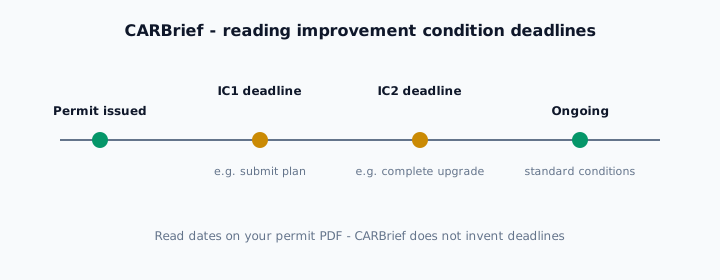
Improvement conditions with future deadlines may still bind you until surrender is accepted or the EA agrees otherwise in writing. See improvement conditions on permits. CARBrief cites conditions as printed; we do not advise whether an IC is discharged by closure activity.
What this guide does not cover
This is a literacy guide on reading published EA materials. It does not cover:
- How to complete a surrender application form or pollution prevention checklist.
- Site remediation, contamination assessment, or landfill aftercare — specialist consultancy and legal advice territory.
- Whether your site qualifies for low-risk surrender — read GOV.UK eligibility criteria and your permit.
- Employment, planning, or contract law on site closure.
- Negotiating surrender with the EA or responding to enforcement before closure.
What CARBrief does with surrendered permits
CARBrief is built for operators reading active permits and CARs. On surrendered permits:
- We can read a historical CAR and the permit that applied at the time if you provide public register documents — useful for understanding past compliance findings during due diligence.
- We do not prepare surrender applications, closure plans, or EA submissions.
- We do not advise whether surrender is complete or whether ongoing liabilities remain — read the register and any EA acceptance document.
Questions
What is environmental permit surrender?
On published EA materials, surrender is the formal process of ending an environmental permit when the permitted activity stops. The permit ceases to authorise operation once surrender is accepted and recorded on the register.
What is low-risk surrender?
GOV.UK describes a low-risk surrender route for certain standard rules permits where the site meets published criteria — for example no pollution risk and waste removed. Read the current GOV.UK low-risk surrender guidance for eligibility; this guide does not assess your site.
Does stopping operation automatically surrender the permit?
No. Published EA guidance treats surrender as a formal process with EA acceptance. Ceasing operation without surrender may leave the permit active on the register with ongoing obligations — read GOV.UK surrender guidance and your permit conditions.
Will CARBrief handle our permit surrender?
No. CARBrief reads permits and CARs. We do not prepare surrender applications, site closure plans, or liaise with the EA on surrender.
Is this legal advice?
No. This guide and the CARBrief sourced reading are informational only. Your permit and the register record are the legal sources. If you need advice on surrender or closure liabilities, instruct a solicitor or environmental consultant.
Informational guide only. Sources: GOV.UK — Surrender an environmental permit; GOV.UK — Surrender a standard rules environmental permit if it’s low risk. Public sector information reused under the Open Government Licence v3.0. Last reviewed 23 September 2026. CARBrief is not the Environment Agency.